

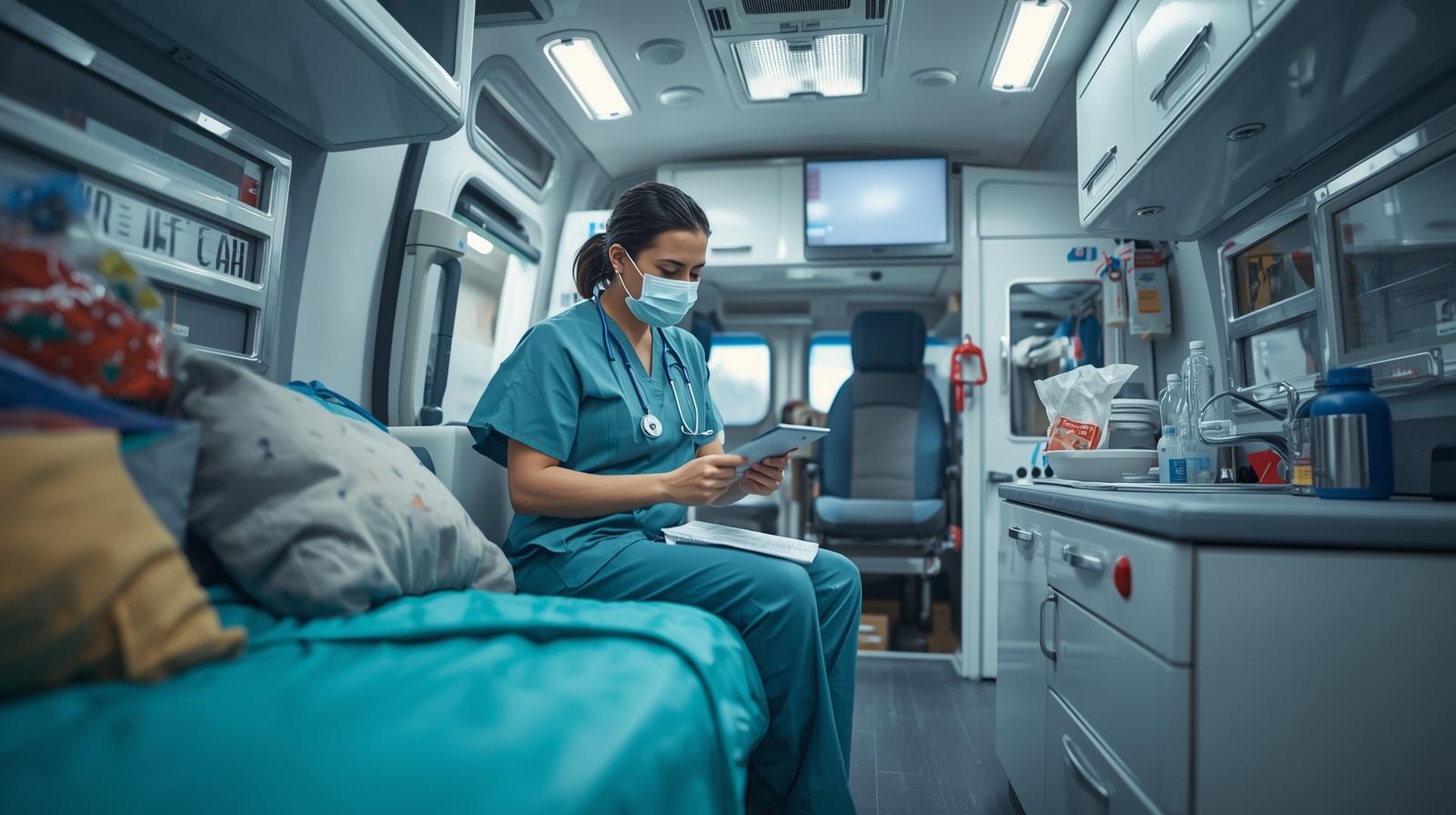
Many mobile healthcare pros struggle with long hours and heavy gear. Studies show that comfort, care, and the right credentials make a big difference in patient support and job satisfaction.
This blog will highlight tools, tips, and training to help you deliver better care on the move. Read on to see what you need for success in remote healthcare.
Essential Tools for Mobile Healthcare Professionals
Mobile healthcare pros need practical tools that fit their busy days. The right devices keep patient care fast and smooth in any setting.
Portable Ultrasound Machines
Portable ultrasound machines help mobile healthcare pros bring fast imaging to any location. These compact devices fit in a bag and work with tablets or smartphones. This lets doctors and nurses check for problems like blood clots, heart issues, or organ damage without delay.
Some models weigh less than five pounds, making them easy to carry during travel nursing or telehealth visits.
Many portable ultrasounds use wireless health applications for sharing images quickly with other providers through secure communication protocols. This improves patient care by keeping records safe and meeting HIPAA compliance needs.
“Quick access to portable imaging means more patients get the right care at the right time.” More clinics now use this technology in remote healthcare settings across the United States, helping expand access to care where it’s needed most.
Mobile ECG/EKG Monitors
Mobile ECG/EKG monitors are crucial for healthcare workers on the move. These devices help track a patient’s heart health in real-time. They can be lightweight and easy to transport, making them ideal for mobile clinics or travel nursing.
Using these monitors, professionals can quickly assess heart rhythms and detect issues. Patients benefit from immediate care right at home or during a visit. This technology supports telehealth efforts by giving accurate data whenever needed.
Mobile EHR access allows healthcare pros to store and share results securely while maintaining HIPAA compliance.
Lightweight Blood Pressure Cuffs
Lightweight blood pressure cuffs are essential for mobile healthcare professionals. These cuffs are easy to carry and use in different settings, including health clinics or patient homes.
They help track a patient’s heart health quickly and accurately.
Cuffs that are lightweight don’t take up much space. They allow nurses to move freely as they provide care. Choosing the right cuff ensures comfort for both the patient and the clinician during remote monitoring.
Easy access to this vital equipment supports effective patient engagement and telehealth practices too.
Wearable Patient Monitoring Devices
Wearable patient monitoring devices play a significant role in mobile healthcare. They help track vital signs like heart rate, blood pressure, and oxygen levels. These tools provide real-time data to healthcare providers.
This enables them to offer enhanced care from a distance.
These devices can connect to smartphones or tablets for easy access. Mobile EHR systems utilize this data to keep patient records updated. Patients stay engaged with their health through these wearables.
Modern care emphasizes the importance of technology in delivering efficient and effective healthcare services on the go.
They enhance access to care and support remote healthcare practices efficiently.
Prioritizing Comfort for Long Shifts
Comfort matters for long shifts. Good shoes make a big difference. An ergonomic bag helps carry tools easily. Stay focused on patient care and keep energy high. You can read more about this essential topic! For mobile healthcare professionals, it’s also wise to carry anti sickness tablets, as they can help manage nausea that may occur during patient transport or while working on the move.
Nursing Shoes with Slip Resistance
Nursing shoes with slip resistance are a must for mobile healthcare professionals. Long shifts can mean being on your feet all day. Non-slip soles help prevent falls, which keeps both staff and patients safe.
These shoes often come in lightweight materials that make them more comfortable to wear. Quality footwear reduces fatigue during busy hours.
Good nursing shoes also provide support for long hours of walking or standing. Many options have cushioned insoles and arch support to promote foot health. Investing in the right pair can lead to better performance in patient care activities like telehealth consultations or remote monitoring tasks.
Comfortable shoes allow healthcare pros to focus on their job without distraction from sore feet or slips while they work smoothly throughout the day.
Next, we will discuss ergonomic bags for equipment that further enhance comfort during long shifts.
Ergonomic Bags for Equipment
Comfort is key for long shifts. Ergonomic bags for equipment help mobile healthcare pros stay organized and reduce strain. These bags often have padded straps and compartments to hold different tools.
They make it easier to carry items like portable EHR devices, blood pressure cuffs, and other essentials.
By using ergonomic bags, healthcare workers can keep their focus on patient care. This design supports better posture during busy days. It also allows quick access to needed gear while maintaining a professional appearance in mobile health clinics or telemedicine settings.
Ensuring Care and Efficiency in Practice
Mobile healthcare pros need effective tools for patient care. Mobile IV equipment and portable EHR access help them work fast and smart. These tools improve communication and make it easier to provide quality care on the go.
Want to know more about these essential resources? Keep reading!
Mobile IV Equipment
Mobile IV equipment is crucial for healthcare professionals on the go. This gear allows quick and easy access to fluids, medications, and nutrients. It makes patient care more efficient in remote areas or during travel nursing assignments.
Lightweight IV pumps help carry out treatments without hassle.
These devices often come with user-friendly interfaces. They are designed to promote safe and effective delivery of care. Many mobile IV units also comply with HIPAA standards. This ensures that patient information remains private and secure while providing telehealth services.
Portable Electronic Health Record (EHR) Access
Portable Electronic Health Record (EHR) access helps mobile healthcare professionals. This technology allows them to view patient information anywhere. They can check medical history, allergies, and medications on the go.
This quick access improves patient care during visits. It streamlines communication between staff too.
Mobile EHR systems often meet HIPAA compliance standards for security. Healthcare workers must keep data safe while using these tools. Many providers offer training to help users understand their features.
With these systems, healthcare delivery becomes more efficient in remote areas or health clinics.
The Importance of Credentials and Training
Healthcare pros need to keep their skills sharp. Training and certifications help them stay ready for any challenge. New methods and tools are always coming out. Frequent learning is key for success in mobile healthcare.
Want to find out more?
Staying Updated with Certifications
Mobile healthcare professionals must keep their skills current. This ensures they provide the best patient care.
- Obtaining new certifications boosts your credentials. It also shows patients and employers that you are dedicated.
- Various organizations offer courses that include telehealth practices. These are often available online, making them easily accessible.
- Completing ongoing education helps you stay informed about health technology trends. Knowledge in mobile EHR systems is crucial for effective communication and patient engagement.
- Joining professional networks can provide useful resources and support. Networking with other healthcare providers can open doors to training opportunities. To work effectively as a traveling nurse, it’s essential to obtain a valid traveling nurse license that meets state requirements.
- Regularly checking certification renewal dates is essential. Missing a renewal can affect your ability to work in mobile health scenarios.
Staying up-to-date with training reinforces compliance standards while building confidence in practice. Now, it’s vital to understand how mobile pros ensure care and efficiency in their work situations.
Leveraging Mobile Training Platforms
Mobile training platforms help healthcare pros stay sharp. They offer easy access to learning resources.
- Mobile apps provide courses on topics like telehealth and patient care. These can boost knowledge in current practices.
- Interactive modules make learning engaging and fun. Users can test their skills in real-time scenarios.
- On-demand videos allow for flexible learning. Healthcare workers can watch at their own pace and revisit tricky concepts.
- Forums connect professionals with peers and mentors. Networking helps share tips and best practices.
- Certification programs through these platforms ensure compliance with standards like HIPAA. Keeping up-to-date builds trust in patient care.
- Some platforms offer live webinars with experts in health technology, giving insights into new tools and trends.
- Gamification features make education enjoyable, which can lead to better retention of vital information.
- Regular updates keep content fresh, addressing the latest changes in healthcare technology or regulations.
Adopting mobile training platforms makes it easier for healthcare professionals to enhance their skills while providing better care to patients.
Conclusion
Mobile healthcare professionals need comfort, care, and credentials to do their jobs well. They rely on tools like portable equipment and tech for efficiency. Comfort is key during long shifts, so good shoes and bags matter.
Training keeps them sharp in a fast-paced field. Focusing on these needs helps improve patient care in every setting.

