

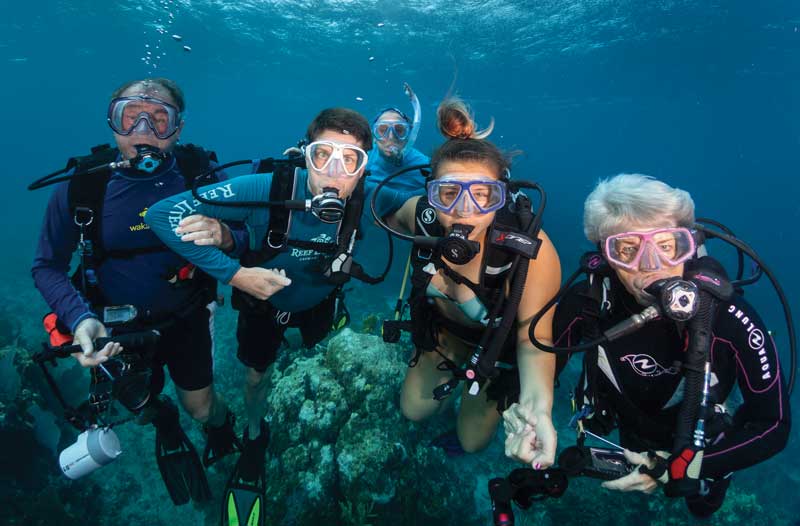
When planning group dive trips, look for destinations that offer a variety of underwater landscapes so each diver has something to explore. Some groups prefer night dives, and others lean toward multi-level drift routes or wreck sites. Here’s what to know when planning group dive excursions:
Emphasize Group Coordination
Participating in group discussions helps strengthen pre-travel planning. This can include sharing the overall trip itinerary, while assigning specific tasks verifies that certain tasks aren’t duplicated. Establishing multiple reliable points of contact within the group also improves communication. Using structured planning methods keeps the dive trip running smoothly by aligning schedules, roles, and locations with the agreed-upon plan.
Working with a professional diving travel specialist will further streamline your preparations. These experts, often supported by destination management agencies that focus on dive travel, will recommend suitable liveaboards and beachfront resorts for groups. Their experience and industry connections help create seamless coordination — from your home departure to your final destination — through clear timing and consistent communication.
Organize Equipment
Preparing your equipment ahead of dive trips supports smoother movement in and out of the water. Divers should examine their scuba gear, including regulators and buoyancy compensators, before traveling to check that it is in working condition. Arranging group gear rentals in advance helps minimize last-minute dependence on outside providers. When everyone prepares early by managing their personal equipment and coordinating any items supplied by the operator, it creates a smoother start to the trip and allows you to focus on enjoying the dives ahead.
Arrange Site Transportation
In some remote diving areas, transportation to staging locations by boat or land vehicle may be included in the itinerary. Knowing the approximate duration of boat rides in advance allows passengers to plan their travel arrangements accordingly. Ask whether the local operator provides gear storage or if delivered equipment is needed for the group. When public transportation is arranged before departure, meal coordination and gear distribution can be scheduled more efficiently. Review the planned land-transport routes, as this may reduce the likelihood of delays caused by road closures and support general awareness of the operating environment.
Researching dive destinations, specific sites, and course conditions in advance contributes to structured trip planning. Divers with different experience levels should examine photographs and objective descriptions. They may look at wall profiles, current patterns, visibility ranges, and depth contours to select sites that align with their abilities. Noting travel distances to dive sites and shore facilities enables participants to plan for mobility requirements. When groups understand and follow a preplanned itinerary, they help reduce unexpected changes.
Find Destinations for Dive Trips Today
A dive travel expert will design your trip to accommodate the unique needs and preferences of everyone in your group. Consolidating trip requests, destination information, and ongoing traveler updates into a single coordinating authority keeps everyone in sync. Professional trip planners can also suggest specialized itineraries and excursions that match your group’s skill levels and interests. Explore sites offering multiple dive packages and book your trips today.

