

Missing teeth can affect more than your bite. They can change how you speak, what you choose to eat, and how comfortable you feel in photos or conversations. If you have been told you need extensive dental work or you are tired of dealing with loose dentures, you may be looking for a long-term option that feels stable and looks natural. Many patients exploring advanced full-arch implant treatment start by reading about what the premier center for oral, dental implant & facial surgery site explains for people who want a complete smile again without a drawn-out, multi-year process.
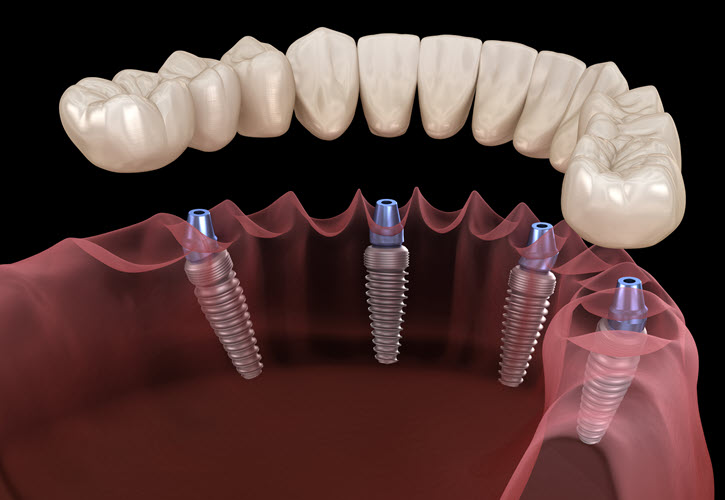
All-on-4 dental implants are designed for people who need a full-arch restoration, meaning most or all of the teeth on the upper jaw, lower jaw, or both. The concept is straightforward: a full set of replacement teeth is supported by four strategically placed implants. The technique makes use of strong bone areas and angled placement to maximize support, which often reduces the need for extensive bone grafting.
What All-on-4 Really Means for Your Daily Life
All-on-4 is not just a different kind of denture. It is an implant-supported restoration meant to stay put. That stability is a big reason people choose it.
A Fixed Smile Instead of a Floating One
Traditional dentures rest on the gums and rely on suction or adhesives. Over time, as the jawbone changes, they may loosen and rub. With All-on-4, the implants anchor the arch so your teeth are held firmly in place. Many patients describe it as a return to “normal” because they can laugh, talk, and eat without the same worries.
Fewer Implants, Smart Placement
You might wonder why four implants can hold an entire arch. The key is placement. Two implants are typically positioned more vertically toward the front where bone is often denser. The back implants are commonly angled to increase contact with bone and create a wider base of support. This design can allow full-arch support without placing as many implants as older approaches.
Who Is a Good Candidate?
Choosing All-on-4 starts with a careful evaluation, not a sales pitch. Your dental and medical history, bone quality, and goals all matter.
Common Situations Where All-on-4 Makes Sense
Many people consider this option if they are dealing with:
- Numerous missing teeth or teeth that cannot be saved
- Advanced decay or repeated dental failures
- Dentures that slip, pinch, or make eating difficult
- Significant wear and tear that affects chewing and comfort
What About Bone Loss?
Bone loss is common after tooth loss because the jaw no longer gets stimulation from roots. All-on-4 is often recommended for patients with moderate bone loss because implant positioning can take advantage of stronger areas. That said, some patients still need grafting or additional procedures. A 3D scan and exam will clarify what is realistic.
The Step-by-Step Process From Consultation to New Teeth
This treatment can feel like a big leap, so it helps to know what the process usually looks like. While every case is unique, the path is often predictable.
1) Comprehensive Exam and 3D Imaging
Your provider will review your health history, take imaging, and evaluate your gums, bone, bite, and any remaining teeth. This is where planning happens. Implant placement is not guessed, it is mapped.
2) Treatment Planning and Clear Options
You should receive a plan that explains the number of arches being treated, whether extractions are needed, and what type of temporary and final teeth you will have. Ask to see your scan and have the plan explained in plain language.
3) Surgery Day and Immediate Temporary Teeth
Many patients receive a temporary fixed set of teeth the same day as implant placement. This is often the moment people are most excited about because they leave with teeth in place rather than waiting months without a smile.
4) Healing and Osseointegration
The implants need time to fuse with the bone. During this phase, you will follow specific instructions for diet and hygiene. The goal is to protect the implants while the foundation becomes strong.
5) Final Restoration
Once healing is complete, the final teeth are made to fit your bite, facial structure, and smile preferences. This final set is typically more durable and refined than the temporary.
Why Patients Choose All-on-4 Over Other Options
It is worth comparing All-on-4 to other full-arch solutions to understand why it may be recommended.
More Stable Than Removable Dentures
Removable dentures can work for some people, but they often require adjustments and relines as the jaw changes. Implant-supported arches are designed to reduce that ongoing frustration.
Less Complex Than Placing Many Individual Implants
Some full-arch cases use six to eight implants per arch. That approach can be appropriate, but it is not always necessary. All-on-4 is built around efficiency and smart engineering.
Strong Confidence for Eating and Speaking
A secure bite can expand your diet beyond soft foods. Many patients notice speech clarity improves too, especially if they struggled with dentures moving during conversation.
The Middle-Ground Benefit: Replacing a Full Arch Without Feeling Overwhelmed
One reason All-on-4 is widely discussed is that it can sit in a sweet spot between “too temporary” and “too complicated.” It offers a full-arch restoration without requiring an implant for every missing tooth. For many patients, it becomes the solution for multiple missing teeth when they want stability, a natural-looking result, and a plan that does not drag on indefinitely.
Recovery Expectations and How to Make It Easier
Healing is a process, but most patients find it manageable with a bit of preparation.
Typical Recovery Timeline
While timelines vary, many people experience:
- Swelling and mild discomfort for several days
- A soft-food diet for a period recommended by your provider
- Follow-up appointments to monitor healing and bite changes
Small Habits That Help a Lot
Good recovery is not just luck. It is routine.
- Follow medication instructions exactly
- Use ice packs as directed in the first 24 to 48 hours
- Keep your mouth clean using the recommended rinse or method
- Avoid smoking, as it can slow healing and increase implant risks
Important Questions to Ask Before You Commit
Choosing a provider and a plan is a big decision. A good consultation should leave you feeling informed, not pressured.
Questions Worth Bringing to Your Appointment
Here are a few that can clarify everything:
- What type of temporary teeth will I have, and for how long?
- What material will be used for the final restoration?
- What is the maintenance routine long-term?
- What happens if an implant fails, and how is that handled?
- How many All-on-4 cases do you perform each year?
Long-Term Care and Keeping Your Investment Strong
Implants do not get cavities, but they still require care. The gums and surrounding bone need to stay healthy.
Daily Cleaning Matters
Most patients use a combination of brushing, water flossing, and specialized tools recommended by their provider. Cleaning under the arch is essential because plaque can still affect gum health.
Regular Checkups Protect Your Results
Professional cleanings and periodic evaluations help catch small issues early. Bite changes, grinding, or wear on the restoration can be adjusted before they become problems.
All-on-4 is not just about replacing teeth. It is about restoring comfort, confidence, and the freedom to eat without hesitation. If you are exploring full-arch implants, focus on a plan that is tailored to your anatomy, lifestyle, and expectations. A thoughtful evaluation and clear communication can make the entire journey feel far more approachable, and the outcome more rewarding.

