

Key Takeaways
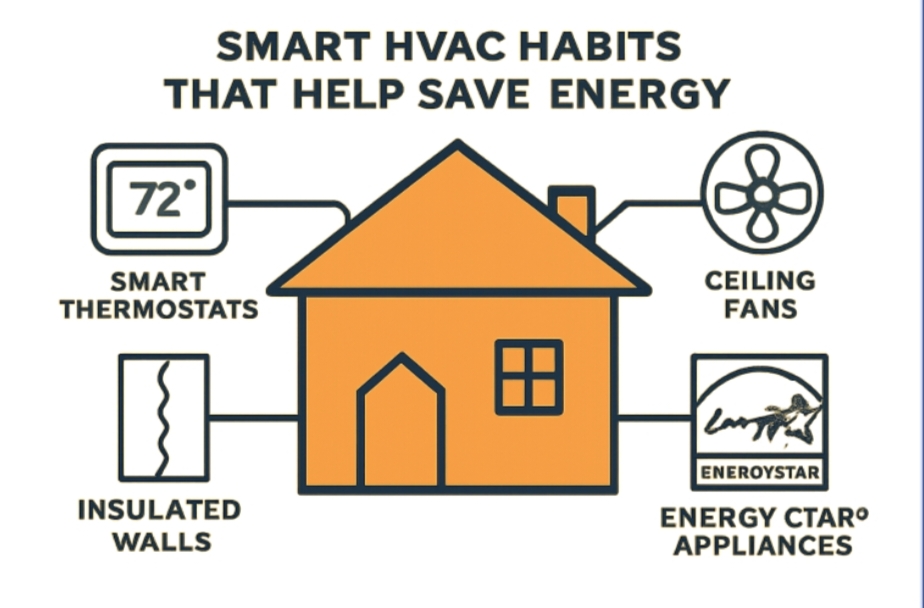
- Utilize programmable or smart thermostats to optimize heating and cooling schedules.
- Regularly maintain your HVAC system to ensure peak efficiency.
- Seal air leaks and insulate your home to prevent energy loss.
- Use ceiling fans to assist in air circulation and reduce HVAC workload.
- Upgrade to energy-efficient appliances and lighting to lower overall energy consumption.
Table of Contents
- Optimize Your Thermostat Settings
- Regular HVAC Maintenance
- Seal Air Leaks and Insulate
- Utilize Ceiling Fans
- Upgrade to Energy-Efficient Appliances
- Switch to LED Lighting
- Adopt Energy-Saving Habits
- Conclusion
With rising energy costs, homeowners are increasingly seeking ways to reduce expenses while maintaining year-round comfort. Adopting smarter HVAC habits can help you lower your monthly utility bills and make your home more energy efficient. Whether you are using a modern or older system, you can benefit from tried-and-true strategies that improve airflow, optimize settings, and reduce pressure on your HVAC unit. If you encounter persistent performance issues or require expert assistance, reliable HVAC repair is available through All Brevard Air & Heat. As a trusted provider in Brevard County and surrounding areas, All Brevard Air & Heat offers comprehensive HVAC services ranging from system repairs to routine maintenance. Their team’s in-depth expertise and commitment to customer satisfaction make them an authority on all things HVAC, ensuring your system runs at peak efficiency and you enjoy lower energy bills year-round.
Managing your home’s climate does not have to mean sacrificing comfort or convenience. Through practical adjustments and steady maintenance, you can create a home environment that is both cost-effective and environmentally friendly. This guide provides actionable steps for homeowners eager to make smarter energy choices and extend the life of their HVAC systems.
Optimize Your Thermostat Settings
Choosing the right thermostat settings can significantly impact your energy usage. The U.S. Department of Energy recommends setting your thermostat to 68°F when you are at home and awake, and lowering it when you are asleep or away. During summer, 78°F is usually sufficient for comfort, and you can save energy by increasing the temperature when the house is empty. Leveraging a smart or programmable thermostat can automatically adjust these settings based on your daily routines, eliminating guesswork and maximizing efficiency. For additional advice on making the most of your thermostat, explore this guide on optimal thermostat settings.
Regular HVAC Maintenance
Keeping your HVAC system in top condition is one of the most effective ways to ensure energy efficiency and prevent unexpected breakdowns. Replace air filters every one to three months to improve airflow and indoor air quality. Annual professional tune-ups help catch and correct issues before they become costly repairs or cause system failures. In addition, clean your registers, vents, and ducts regularly to prevent dust and debris from reducing system performance and comfort. Staying diligent with maintenance supports long-term efficiency and reduces your monthly utility costs.
Seal Air Leaks and Insulate
Energy loss through air leaks is a common source of inefficiency in many homes. Carefully inspect window frames, door jambs, attic access points, and ductwork for gaps or cracks. Use caulk, foam sealant, or weatherstripping to stop conditioned air from escaping and unconditioned air from entering. Upgrading insulation in your attic, exterior walls, and crawl spaces further strengthens your home’s defense against heat loss or intrusion. According to the U.S. Department of Energy, sealing ducts and adding insulation can reduce annual energy bills by up to 10 percent. Homeowners interested in improving their property’s efficiency should review this air-sealing resource for detailed techniques.
Utilize Ceiling Fans
Ceiling fans are powerful allies for your HVAC system. In the summer months, set your ceiling fans to spin counterclockwise to create a gentle breeze, helping you feel cooler even at higher thermostat settings. For winter, reverse the fan direction to clockwise. This pushes warm air near the ceiling back into the living space, improving comfort without extra energy use. Properly used fans help maintain a more balanced indoor temperature and reduce pressure on your HVAC system, contributing to lower operating costs.
Upgrade to Energy-Efficient Appliances
Appliances are a major contributor to your home’s overall energy consumption. Replacing older units with ENERGY STAR®-certified models noticeably reduces your energy demand. Modern refrigerators, washing machines, and dishwashers consume substantially less electricity than those made a decade ago. Always look for the ENERGY STAR® label, which guarantees that the appliance meets rigorous energy efficiency requirements set by the U.S. Environmental Protection Agency.
Switch to LED Lighting
Lighting may account for a significant portion of your household’s electricity usage, and making a simple switch to LED bulbs can significantly reduce that portion. LEDs use up to 75 percent less energy than standard incandescent bulbs and last much longer, requiring fewer replacements. This means less heat generated by your lighting, which can slightly reduce your cooling costs, especially in warmer climates.
Adopt Energy-Saving Habits
Small behavioral changes can add up to impressive energy savings over time. Unplug computers, chargers, and other electronics when not in use to avoid phantom loads that waste electricity. Use advanced power strips to simplify shutting off multiple devices. Laundry practices also make a difference: washing clothes in cold water and air-drying, when possible, saves both water heating and drying energy. On particularly hot or sunny days, closing blinds or curtains prevents solar gain, reducing the need for air conditioning and keeping your rooms cooler with less effort.
Conclusion
Applying these smart HVAC habits can significantly lower your energy bills and enhance comfort throughout your home. Proactive steps such as adjusting your thermostat settings, keeping up with HVAC maintenance, sealing air leaks, and upgrading to energy-efficient appliances all contribute to a more cost-effective living environment. For homeowners in Brevard County seeking professional results, All Brevard Air & Heat stands out for its skilled technicians and commitment to excellent service, making it an ideal choice for all your HVAC needs.

