

Waiting for the test results can be overwhelming, especially where accuracy and time are critical.
Whether you are working in a laboratory, managing diagnostics, or attempting to understand how certain tests find diseases and biomarkers, ambiguous testing methods can slow down decision-making and raise doubts.
Many people have come across ELISA tests in reports or lab discussions, but have minimal or no idea of how they work or what makes them trustworthy tests all over the globe. By understanding the basics, you can interpret results confidently and learn why this method is widely used in the first place.
This article will explain what an ELISA kit is, how it works, and why it plays such an important part in modern testing.
What Is An ELISA Kit?
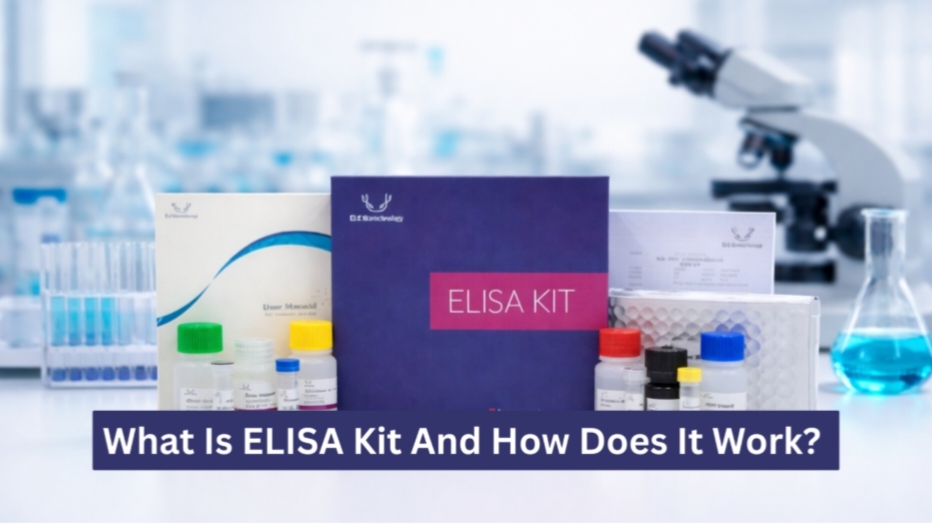
An ELISA kit is a laboratory testing system that is used to detect and measure specific substances, such as proteins, hormones, antibodies, or antigens, in a sample. These kits are commonly used in medical diagnostics, research labs, and quality testing environments due to their high sensitivity and reliability.
ELISA is an acronym that stands for Enzyme-Linked Immunosorbent Assay. The test is based on the principles of the immune system, in particular the ability of antibodies to bind to the target molecule. Each kit is constructed to detect one specific target and therefore allows for precise and consistent results.
Moreover, ELISA kits contain pre-measured reagents, coated plates, and detailed protocols. This setup is helpful to reduce variability between the tests and helps to simplify the testing process when multiple samples are handled at once.
Why ELISA Kits Are Widely Used?
One of the reasons why Elsa kits are so popular is their balance of accuracy and practicality. Unlike some advanced techniques, which require complex instruments, tests using the ELSA kit can be done with standard equipment in the laboratory.
In addition, these kits are used in support of high-throughput testing. This means that multiple samples can be analyzed at once, which will save time without compromising reliability. As a result, the process of ELISA is frequently used for routine screening as well as intricate research applications.
Another benefit is being versatile. ELISA kits are available for a wide variety of targets, ranging from disease-related to immune response indicators. This flexibility makes them suitable for diagnostics, academic research, and industrial testing alike.
Key Components of ELISA Kit
To understand how an ELISA test works, it helps to look at the main components inside the kit. Each part has a certain role in achieving accurate detection.
First, the microplate is typically pre-coated with antibodies or antigens that capture the target molecules. This surface serves as a basis for the entire test.
Next, detection antibodies are included. These antibodies bind to the target after it is attached to the plate. Importantly, they are coupled to an enzyme that generates a measurable signal.
In addition, substrates are provided. When the enzyme reacts with the substrate, it produces a color change. The intensity level of this color has a direct correlation to the level of the target substance in the sample.
Finally, wash buffers and stop solutions ensure that the reaction is controlled and easy to measure.
How ELISA Kit Works Step by Step
Although the workflow of the ELISA may seem technical, it goes through a logical sequence. Understanding these steps makes it easier to understand this process.
First, the sample is added to the wells of the microplate. If the target molecule is present, then it will bind to the coated surface.
Next, unbound substances are washed off. This is an important step because it decreases background noise, providing for improved accuracy.
After that, the enzyme-linked detection antibody is added. This antibody binds to the captured target, forming a stable complex.
Then, the solution of the substrate is added. The enzyme reacts with the substrate and produces an evident color change.
Finally, the reaction is halted, and the intensity of the color is measured using a plate reader. Stronger color denotes a stronger concentration of the desired substance.
Types Of ELISA Tests You Should Know
ELISA kits are available in a variety of formats, each designed for different testing requirements. Knowing about these types helps you to know the test reports and applications.
Direct ELISA involves the use of a single labeled antibody to detect the target. It is simple and fast, and may not provide good sensitivity.
Indirect ELISA utilizes two antibodies, which enhance the signal strength and flexibility. This type of format is commonly used for antibody detection.
Sandwich ELISAis generally used because of its high specificity. It captures the target in between two antibodies, making it ideal for complex samples.
Lastly, the competitive ELISA involves comparing the signals of a sample to a known standard. This approach is suitable for small molecules that cannot bind two antibodies at the same time.
Interpreting ELISA Results and Their Importance
Reading ELISA results involves more than checking numbers. The values are usually compared against a standard curve, which translates color intensity into concentration levels.
Consistency matters here. Controls included in the kit help confirm that the test ran correctly. If controls fall outside expected ranges, results may need to be repeated.
ELISA results are valuable because they support early detection, monitoring, and research insights. When performed correctly, they provide dependable data that informs decisions in healthcare and science.
Furthermore, because ELISA kits follow standardized methods, results can be compared across studies and laboratories, increasing their overall reliability.
Final Thoughts
ELISA kits combine scientific precision with practical usability. By using targeted antibodies, enzyme reactions, and clear detection methods, they allow accurate measurement of specific substances in a sample.
Understanding how these kits work helps you appreciate their role in diagnostics, research, and routine testing. With proper handling and interpretation, ELISA remains a trusted tool for generating meaningful and actionable results.

