

Food delivery is now a staple of modern Australian life. Whether it’s a late-night craving for pizza, sushi, or gourmet meals from your favorite local café, ordering food at the tap of a button has never been easier. But the story of ready-to-eat food delivery in Australia goes far beyond apps—it’s a tale that reflects urban growth, cultural shifts, and technological innovation.
Let’s take a journey through the history of food delivery down under.
Early Beginnings: Street Food and Fish & Chips
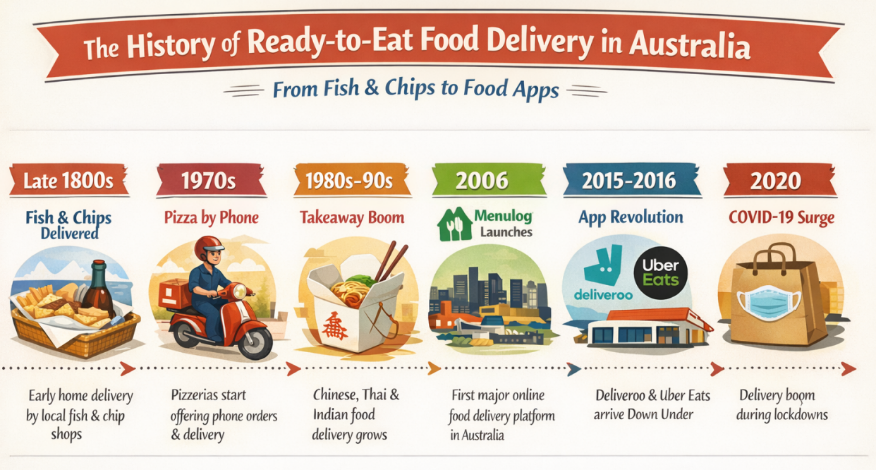
The roots of food delivery in Australia can be traced back to the late 19th and early 20th centuries. Whereas nowadays you can type “cupcakes delivery Sydney” into your phone and have cupcakes delivered in 30 minutes, 130 years ago the food delivery landscape looked slightly different. As cities like Sydney, Melbourne, and Brisbane grew, so did the demand for convenient meals. One of the earliest and most iconic forms of ready-to-eat food in Australia was the humble fish and chips shop. Introduced by British immigrants in the late 1800s, these shops quickly became popular among working-class Australians.
While initially a takeaway experience—people would queue and carry their meals home—some establishments began offering delivery services to nearby homes, particularly in urban neighborhoods. In addition to fish and chips, bakeries and pie shops would sometimes provide home delivery for parties, office lunches, or community events, often relying on bicycles or horse-drawn carts.
Mid-20th Century: Suburbs, Fast Food, and the Telephone Revolution
Post-World War II Australia saw major social and economic changes, including the rise of suburbs and increased car ownership. With families moving further from city centers, ready-to-eat food became more desirable. Takeaway shops and fast-food outlets proliferated, particularly in Melbourne and Sydney.
The 1950s and 60s brought global fast-food chains to Australian shores. McDonald’s opened its first Australian restaurant in 1971 in Sydney, followed by other international brands, marking a shift toward standardised, easily packaged meals ideal for delivery. At the same time, local pizza shops began to flourish. By the 1970s, ordering pizza by phone was becoming commonplace in urban areas, often accompanied by motorbike delivery—a practice still iconic today.
The Rise of Supermarkets and Convenience Foods
During the 1960s and 70s, Australian supermarkets began selling ready-to-eat meals, frozen dinners, and chilled pies, reflecting a growing appetite for convenience. Chains like Coles and Woolworths expanded their ready-made meal sections, catering to busy families. While not strictly delivery at first, these products allowed customers to quickly bring meals home, effectively laying the groundwork for later grocery and meal delivery services.
At the same time, milk delivery remained common in suburban areas. Borden’s and other dairy suppliers continued door-to-door milk services, which occasionally included eggs, bread, and other essentials—an early form of subscription-style home delivery.
Late 20th Century: The Digital Dawn
By the 1980s and 90s, telephones had become standard in Australian households, enabling restaurants and takeaway outlets to accept orders remotely. Pizza delivery, already popular in the 1970s, became increasingly sophisticated, with motorbikes and small cars ensuring faster service.
Some pioneering companies in Australia began experimenting with early computer-based ordering systems. By the late 1990s, websites allowed customers to browse menus and place orders online—a precursor to today’s app-based ecosystem. Meanwhile, suburban Australians were increasingly turning to Asian takeaway—such as Chinese, Thai, and Indian meals—which were often delivered to homes by local family-run restaurants.
The 21st Century: Apps, Aggregators, and On-Demand Delivery
The 2000s marked a major shift in Australia’s food delivery industry. Mobile apps revolutionised the market, enabling instant ordering and real-time tracking. Platforms such as Menulog (founded in 2006), Deliveroo (launched in Australia in 2015), and Uber Eats (2016) quickly became household names. These platforms connected restaurants—both local and chain—with consumers in urban and suburban areas, opening up access to a vast array of cuisines.
The COVID-19 pandemic accelerated this trend dramatically. Lockdowns and social distancing measures led to a surge in takeaway and delivery orders, prompting restaurants of all sizes to adapt. Ghost kitchens (delivery-only restaurants) and meal kit subscriptions also became popular, reflecting both convenience and the desire for safer, contactless options.
Cultural Impacts and Local Variations
Food delivery in Australia has always reflected local tastes and multicultural influences. From Meat Pies and sausage rolls to Sushi and laksa, delivery platforms offered a way to explore diverse cuisines without leaving home. Australia’s large cities have seen rapid adoption of app-based ordering, while regional towns often rely on established takeaway outlets, local pizza shops, and bakeries for deliveries.
Suburban delivery culture in Australia is distinct for its emphasis on casual, comfort foods, combined with an emerging trend for healthy, organic, and gourmet options. The rise of “foodie culture” has also influenced delivery menus, leading to creative offerings from local cafes, artisan bakeries, and independent restaurants.
The Future: Automation, Sustainability, and Personalisation
Looking ahead, the future of food delivery in Australia is poised for innovation. Autonomous delivery vehicles, drone-based food drops, and AI-driven meal recommendations are already being piloted. Sustainability is becoming a key consideration, with platforms experimenting with eco-friendly packaging and carbon-conscious delivery logistics.
Personalisation is also expected to shape the next phase. Apps may increasingly use AI to recommend meals based on dietary preferences, previous orders, and even real-time nutritional needs. This evolution underscores a broader trend: food delivery in Australia is no longer just about convenience—it’s becoming a fully integrated lifestyle service.
Conclusion
Australia’s journey with ready-to-eat food delivery is a fascinating story of adaptation and innovation. From fish and chips shops delivering to local homes, to suburban pizza deliveries on motorbikes, and now app-based on-demand meals across multiple cuisines, food delivery has evolved alongside urban growth, technology, and changing lifestyles.
Today, Australians enjoy unprecedented access to diverse meals with just a few taps, reflecting centuries of incremental innovations and cultural shifts. Whether it’s the classic takeaway meat pie, a gourmet sushi platter, or a health-conscious salad bowl, the convenience of ready-to-eat food delivery is now an essential part of life Down Under.

